


The McKinsey 7 S Model
The McKinsey 7 S model is a classic framework through which to consider organisational change. It highlights seven different factors, all beginning with the letter S, that should be considered when any organisational change is being planned.
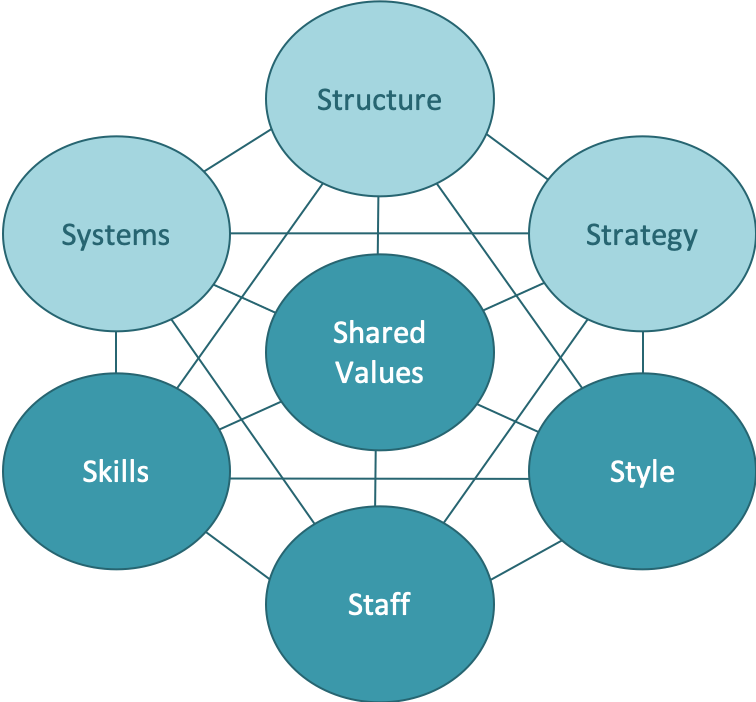
The model is excellent in two primary ways. Firstly, it clearly draws out the importance of the human side of change. Secondly, it links each factor to all of the other factors, which helps to bring to life their complexity and inter-relatedness.
While this model is very simple, it’s one that organisational change practitioners should be aware of. They should also be aware of the key message that underlies the model.
That message is that you must remember that every factor you seek to change in an organisation in turn affects all the other factors of that organisation.
What this means is that whatever you’re planning on changing directly, you also need to plan for the knock on effects of that direct change on all other areas of the organisation, if you are to lead an effective change program.
Learning More
organisational change is complex and hard to lead. The 7 factors detailed by McKinsey in this model may be useful to include in your strategy work using either the Strategic Management Framework or VMOSA tool.
Many efforts to create lasting change in include the use of organisational development programs. You might find our posts on Force Field Analysis and the similarities between change models interesting. Lastly, we’ve also briefly summarized another McKinsey model, their Influence model of change.
Several of the leading models of change may not have not been critiqued sufficiently.
We think organisational change is a fascinating and hugely important concept and activity.
organisations spend nearly all their time changing, so organisational change is always taking place. In some ways organisational change is really just another way to think about organisational leadership.
There are many models of change that we look at elsewhere, but they key point that we’re interested in here is the distinction between people related change and other forms of change. In our view, the people side of organisational change is the essence of organisational leadership and a key skill for all leaders to work on.
Sources and Feedback
Peters, Thomas J. In Search of Excellence : Lessons from America’s Best-Run Companies. New York :Harper & Row, 1982. McKinsey also have included the 7 S model in their Enduring Ideas series, and you can see their writings and listen to their thoughts on the model here.
We’re a small organisation who know we make mistakes and want to improve them. Please contact us with any feedback you have on this post. We’ll usually reply within 72 hours.


